

Request a Sample Itinerary
We will send you a sample itinerary which you can further customize as you wish. We will never sell or share your email address with anyone else.
Cycling Puglia: Trulli, Trattorias, and Italy's Undiscovered Heel
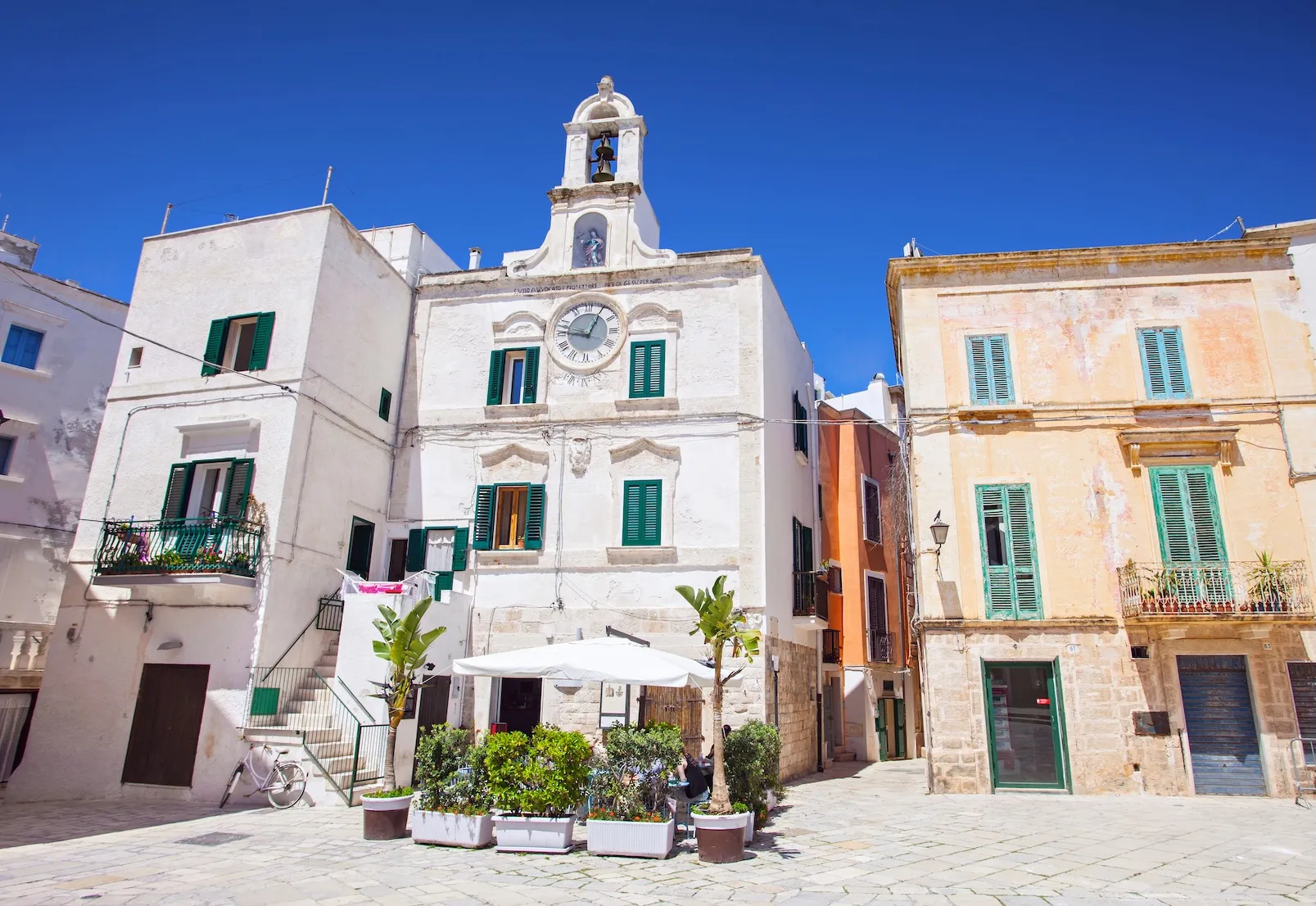
Every year, millions of travelers pour into Tuscany and the Amalfi Coast, and Puglia — the long, sun-baked heel of the Italian boot — quietly keeps doing its own thing. Whitewashed hilltop towns, an Adriatic coastline stretching more than 500 miles, olive trees old enough to have witnessed the Roman Empire, and food so good that even other Italians, a people not known for regional modesty, will happily admit Puglia does it better. This is Italy's deep south at its most authentic: slow, warm, and genuinely undiscovered relative to the rest of the country.
A cycling tour through the region typically links Matera, Alberobello, Ostuni, and Monopoli, moving through a landscape shaped by an unlikely parade of past rulers — Greeks, Romans, Normans, Spanish, and Turks have all left fingerprints on Puglia's architecture, culture, and cuisine. The terrain itself is famously forgiving, with a network of quiet country lanes and gentle grades that make this one of the most accessible regions in Italy for beginner and intermediate riders alike.
Cave Dwellings, Conical Roofs, and a Very Long Coastline
Puglia's headline attractions read like a list of things that shouldn't still exist, and yet do. Matera, a UNESCO World Heritage Site, is built around the Sassi — ancient cave dwellings carved into limestone cliffs that have been continuously inhabited for more than 9,000 years, making it one of the oldest continuously inhabited settlements on Earth. Alberobello, another UNESCO site, is famous for its trulli — whitewashed, conical-roofed stone huts constructed entirely without mortar, clustered together into entire neighborhoods that look like something out of a fairy tale.
Ostuni, often called the "White City," sits perched on a hilltop, its narrow winding streets leading up to an impressive cathedral with panoramic countryside views in every direction. Monopoli offers a different kind of charm: a picturesque seaside town with a historic old center, a bustling harbor, and a waterfront anchored by a 16th-century Charles V Castle. And Polignano a Mare, famous for its dramatic cliffs and crystal-clear waters, draws cliff divers and coastal explorers to its sea caves and cliffside terraces.
Tying it all together is the coast itself — more than 800 kilometers (roughly 500 miles) of it, one of the longest coastlines of any Italian region, alternating between white sandy beaches, rugged rocky coves, dramatic cliffs, and hidden sea caves.
A Climate That Rewards Almost Any Season
Puglia's Southern Mediterranean climate makes it possible to ride here nearly year-round, though the sweet spots are April through mid-July and September through the end of October, when temperatures are pleasantly warm and rain is less likely. August can run a little hot for some tastes, though a cooling sea breeze usually helps. Early spring and late fall bring fewer tourists, at the cost of a somewhat higher chance of rain, while winter temperatures here run roughly comparable to San Francisco — mild by most standards, if not exactly beach weather.
A History Shaped by Everyone Who Ever Sailed Past
Puglia's human history stretches back to the Paleolithic period, with some of the earliest evidence found in the caves of Matera and across the Valle d'Itria. The Romans conquered the region in the 1st century BCE, establishing it as a key agricultural territory prized especially for its olive groves — a reputation that, remarkably, still holds today. Rome's fall in the 5th century CE opened the door to waves of invasion by Goths, Ostrogoths, and Vandals, followed by Byzantine control, and by the 8th century, the Lombards had taken over before the region was fully absorbed into the Byzantine Empire.
The 11th century brought the Normans, who established the Kingdom of Sicily and united southern Italy — Puglia included — under a single crown, turning the region into a genuine center of trade and culture. The 12th century saw further transformation under the Swabian Emperor Frederick II, whose reign brought significant political and cultural development, including the construction of iconic structures like Castel del Monte. After the fall of the Swabian dynasty in the 15th century, Puglia was contested between the Aragonese and the French before ultimately becoming part of the Kingdom of Naples under Spanish rule — a period of heavy Spanish influence and considerable economic growth in agriculture, olive oil, and wine that carried through the 16th century.
The 18th century brought Bourbon control and a mix of growth and hardship, including periods of banditry and social unrest, before Puglia joined the newly unified Kingdom of Italy in 1861. The region played a supporting role in World War I and endured real economic strain during the interwar years under Mussolini's fascist regime, which pushed agricultural reforms while suppressing political dissent. World War II turned Puglia into a critical Allied base starting in 1943, and the region — particularly Bari — suffered significant bombing before liberation and a slow postwar recovery. From the 1980s onward, Puglia gradually emerged as a genuine tourist destination, prized for its unique landscapes, trulli houses, and coastline, and the momentum has only accelerated since the 2000s, with growing investment in tourism, wine, and food products. Matera's 2019 designation as a European Capital of Culture brought the region a fresh wave of global attention.
Eating Like a True Pugliese
If there's one thing that unites Italians across every region on the subject of Puglia, it's grudging or enthusiastic agreement that the food is exceptional. Local ingredients include olive oil, artichokes, tomatoes, eggplants, asparagus, and nuts, and Puglia produces a significant share of Italy's wheat — and, by extension, its pasta. The region's signature shape, orecchiette ("little ears"), is a small, cup-shaped noodle that shows up practically everywhere pasta is served, deeply woven into the local culinary identity.
Cheesemaking is central here too, with cow- and sheep-milk cheeses more common than buffalo milk versions — the town of Noci is particularly celebrated for its mozzarella and burrata. Mozzarella is traditionally kneaded and stretched in hot water and shaped into fist-sized balls; stracciatella, whose name translates to "a little shred," consists of finely shredded mozzarella curds, often drizzled cold over pizza or stirred into soups and sauces; and burrata combines the two, wrapping a solid mozzarella shell around a soft, buttery filling of stracciatella and cream. None of these cheeses keep especially well, even refrigerated — the local wisdom is to eat them fresh, while they're still soft and melty.
Restaurants throughout the region take genuine pride in their antipasti, generous spreads of mixed starters that often showcase the most creative cooking on the menu. And in towns like Cisternino, butcher shops have turned grilling into an art form through a tradition called fornello pronto: buy your meat from the counter, and the butcher will grill it for you, often on a wood-fired barbecue, in a side room with seating where you're welcome to bring your own wine. Regional specialties worth watching for include bombette (literally "little bombs"), spiedini (skewered mixed meats), gnumireddi (lamb liver and herbs), and chicken wings wrapped in smoked pancetta.
Puglia's olive oil production is staggering in scale: the region is home to more than 50 million olive trees and roughly 50 distinct varieties, contributing about 40% of Italy's total olive oil output. That oil, often finished with a peppery kick of hot pepper (peperoncino), forms the backbone of virtually every Puglian recipe.
Wine has historically played a supporting role here — Puglian grapes were often shipped elsewhere to add body to wines produced in other regions — but that reputation is changing fast. Puglia now produces more than 15% of Italy's total wine output and boasts 4 DOCGs and 29 DOCs, Italy's top two quality classifications. The area explored by most cycling routes falls within the Valle d'Itria and Murgia regions: Valle d'Itria is known especially for crisp, mineral whites made from Verdeca and Bianco d'Alessano grapes, while Murgia produces more structured reds, particularly Primitivo and Nero di Troia, near the historic Castel del Monte wine area. Further south, around Salento, bold reds built on Negroamaro and Primitivo grapes dominate.
A Few Local Curiosities
Some of Puglia's olive trees have been dated back roughly 2,000 years, to the beginning of the common era — and locals near Ostuni will tell you, with a straight face, that certain trees nearby are 3,000 years old. Looking at their gnarled, twisted trunks, the claim is hard to dismiss outright. Along the coastal route from Ostuni, riders pass the so-called "Olive Tree of the Crucifix," tied to a local legend about sailors saved from a storm by prayer to a ship's crucifix, later said to have been hidden inside the ancient tree until its rediscovery. The tree still draws an annual pilgrimage each May 3rd, and its shape is often described as bearing a faint resemblance to a cross. To help protect Puglia's ancient groves, uprooting and selling these trees for ornamental purposes is now illegal, though not entirely unheard of.
Just south of modern Monopoli lie the ruins of Egnazia (also known as Gnatia or Ignatia), an ancient Greco-Roman city originally settled by the Messapii, an Indo-European people who inhabited Puglia between the 8th and 3rd centuries BCE, with evidence of even earlier Bronze Age habitation. Under Roman rule, the city thrived as a trading hub where the Via Traiana met the coast road, and it was known for a distinctive solar and fire cult. The site was likely abandoned in the High Middle Ages, possibly due to malaria or attacks by Vandals and Saracens, and though its ancient walls were largely dismantled for building material over a century ago, the 40-hectare site still preserves its outline, along with a necropolis, ancient houses, and an on-site museum featuring well-preserved frescoes.
Getting There
Tours typically start in Bari, served by Bari Airport (BRI), with flights to many European cities including Amsterdam, Frankfurt, London, Paris, and Rome, though there are no direct flights from the U.S. Bari also has a central rail station with direct high-speed Frecciargento service to and from Rome, taking about four hours.
Wine Country Beyond the Bottle
North of Brindisi and Taranto — the heart of the touring area — wines tend toward the fruity and fragrant, with good acidity built primarily from red grapes like Bombino Nero, Montepulciano, and Sangiovese, alongside white Verdeca, Malvasia, Trebbiano, and Bianco d'Alessano. This part of the region has earned real international recognition in recent years, with wines from the Castel del Monte DOC — including Castel del Monte Bombino Nero, Nero di Troia Riserva, and Rosso Riserva — now holding Italy's top DOCG classification.
Toward the center of the region, white wine production leans on Verdeca, alongside newer plantings of international varieties like Chardonnay and Sauvignon Blanc, while the Martina Franca commune produces a distinctive DOC white that can be made either still or as a sparkling Spumante — though it's best enjoyed young, since it tends to shift from pale gold to amber and lose its fresh fruit character within three or four years in the bottle.
Why Puglia Rewards a Bicycle
What makes this region such a natural fit for cycling isn't just the gentle terrain, though that certainly helps. It's the way Puglia rewards close attention — a landscape where a gnarled olive tree might be three thousand years old, where a butcher shop doubles as a dining room, where a cave dwelling has been continuously inhabited since before recorded history began. A car covers the distance between Matera's Sassi and Ostuni's whitewashed streets easily enough. A bicycle moves at exactly the pace this quietly extraordinary region has always kept for itself.
See the complete guidebook here.
Ready to plan your tour?
Tell us where you want to go and how you want to ride. We'll send you an itinerary.