

Request a Sample Itinerary
We will send you a sample itinerary which you can further customize as you wish. We will never sell or share your email address with anyone else.
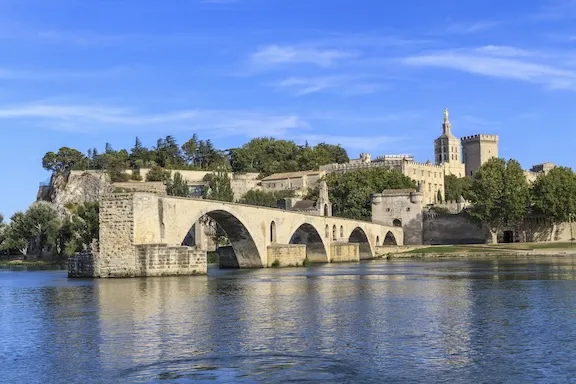
Cycling Provence: Lavender, Roman Ruins, and the Light That Seduced the Impressionists
Some regions are famous for a single thing. Provence is famous for nearly everything at once — ancient abbeys and Roman ruins scattered across a landscape of vineyards and olive groves, lavender fields that perfume the air for miles, and a particular quality of light that convinced some of history's greatest painters to simply stay. Matisse called that light "soft and tender, despite its brilliance." Cézanne, Van Gogh, and Renoir all found it irresistible enough to build entire bodies of work around it. Cyclists get to experience the same landscape at exactly the pace it deserves.
A tour through this corner of southeastern France typically links Vaison-la-Romaine, Bédoin, Gordes, and Saint-Rémy-de-Provence, with routes winding through the Luberon, the Vaucluse, and the Alpilles — a region defined by rolling vineyards, dramatic limestone peaks, and hilltop villages that have barely changed in centuries.
A Landscape of Ancient Stone and Modern Legend
Provence enjoys a classic Mediterranean climate — hot, dry summers, mild winters, and abundant sunshine nearly year-round, with rain concentrated mostly in short, fast-clearing storms during late fall and winter. The ideal cycling window runs from late April through late September, when temperatures are pleasantly warm and rain is unlikely. Summer heat here is rarely stifling, since most of the touring area sits on higher ground, away from the coastal humidity. Spring and fall remain excellent riding seasons, though the chance of rain climbs noticeably as October approaches, and winter touring isn't recommended.
The region's signature climb is impossible to miss, even from a distance: Mont Ventoux, known variously as "the Beast of Provence," "the Giant of Provence," and "The Bald Mountain." A legendary Tour de France finish and a bucket-list ascent for serious cyclists, Ventoux looms over the town of Bédoin, a beloved starting point for riders and a hub of local culture with its own vibrant markets and shaded squares. For those less inclined to tackle the mountain directly, the Gorges de la Nesque offers a rewarding alternative — a stunning canyon with winding roads, dramatic cliffs, and some of the most striking natural scenery in the region.
Villages Built From Golden Stone
Provence's hilltop villages are the region's calling card, and a handful stand out even in this company:
- Vaison-la-Romaine — Renowned for remarkably preserved Roman ruins, a medieval upper town, and a vibrant weekly market, all set against a backdrop of vineyards and rolling hills.
- Gordes — Classified as one of the most beautiful villages in France, this medieval hilltop settlement captivates with golden-stone buildings, winding cobblestone streets, and sweeping views over the Luberon Valley.
- Saint-Rémy-de-Provence — A picturesque town surrounded by olive groves and vineyards, celebrated for its Roman heritage, vibrant markets, and its place in art history as where Van Gogh painted some of his most iconic works.
- L'Isle-sur-la-Sorgue — Known as the "Venice of Provence" for its canals and waterwheels, with an equally strong reputation for antique markets, riverside cafés, and cultural landmarks like the Collegiate Church of Notre-Dame-des-Anges.
Nearby, the Abbaye de Sénanque offers one of the region's most photographed scenes: a serene 12th-century Cistercian monastery framed by rows of iconic lavender fields, offering a glimpse into monastic life set against Provence's characteristic tranquility.
A History Layered by Empires
The word "Provence" itself comes from the Roman Provincia Romana, and the region's history stretches back through the Ligurians, Celts, and Greeks who all left their mark before Rome formally annexed the territory in 125 BCE. Christianity spread through the region by the 4th century CE, with figures like St. Trophimus of Arles playing a key role in conversion, and Provence narrowly avoided invasion during Attila the Hun's campaign through Gaul in 451 CE. By 507 CE, the Frankish King Clovis had brought parts of Provence under Frankish control, folding the region into a growing kingdom.
The Middle Ages saw Provence flourish as a center of culture and religious significance under powerful local counts and the influence of the Holy Roman Empire, becoming, between the 9th and 12th centuries, a genuine hub for medieval art and poetry through the troubadour tradition — a golden age of song and verse that shaped European literary culture for centuries. The Black Death struck hard in 1348–1349, and in 1481, following the death of Charles V, Count of Provence, the region was formally integrated into the French Crown. The Italian Wars of 1494–1525 left a visible mark on the region's art, architecture, and trade, while the 16th-century French Wars of Religion brought bitter conflict between Catholics and Protestant Huguenots.
By the 17th century, Provence had found a different kind of prosperity, flourishing economically through agricultural exports — particularly wine and olive oil — even while remaining politically overshadowed by Paris. The French Revolution brought major upheaval between 1789 and 1799, with noble estates and monasteries confiscated or destroyed outright. The 19th century, though, marked a turning point in the region's cultural identity, as artists including Van Gogh and Cézanne arrived and immortalized its landscapes on canvas. World War II brought German occupation and, in 1944, Operation Dragoon — the Allied invasion of Southern France, staged in part through Provence. In the decades since, the region has experienced a genuine resurgence as a tourist destination, celebrated worldwide for its villages, lavender fields, and cultural heritage.
Eating and Drinking Like a Provençal
Provençal cooking is built on the clean, bright flavors of the Mediterranean — olive oil, wine, tomatoes, melons, and garlic form the backbone of nearly every dish, and good food is treated here as a genuine cornerstone of daily life. Olive oil in particular runs deep: the Greeks introduced olive trees to the region around 600 BCE, and today, bottles marked with an AOC or AOP label guarantee authentic origin, much like a wine label. Unlike wine, though, olive oil doesn't age well and should be stored tightly sealed, away from heat and light. The "Olivades," or Olive Oil Season, runs from late November to late January, when olives are harvested and pressed.
A few dishes are essential to any visit:
- Ratatouille — A simple vegetable stew that, prepared well, bursts with Mediterranean flavor. Eggplant, tomatoes, zucchini, onions, peppers, and garlic are each cooked separately before being gently stewed together.
- Aïoli — A rich sauce blending garlic and olive oil into an emulsion, typically served alongside vegetables and cod or other fish.
- Nougat — A regional sweet made from sugar or honey, egg whites, and almonds or other nuts, entirely free of milk. Locals take genuine pride in this confection, and shops dedicated solely to selling nougat in its many varieties are common.
Wine production here traces back to the Greeks, who first cultivated vines in the hills around Marseille, with the Romans continuing the tradition after annexing the region at the end of the 2nd century BCE. Production got a further boost in the 14th century when Catholic popes relocated to Avignon, driving demand for local wine to supply their court. Except for Châteauneuf-du-Pape and a handful of Muscat dessert wines, Provençal wines haven't historically carried much international reputation — but local vineyards quietly turn out an excellent range of reds, whites, and, above all, rosé.
Châteauneuf-du-Pape stands out as the region's signature wine: a strong, full-bodied red (minimum 12.5% alcohol) that ages beautifully but drinks well young too, actively promoted since the 14th century by the popes who kept their summer palace here. Up to 13 different grape varieties can go into the blend, with Grenache typically leading the way, and part of the wine's distinctive character comes from the vineyard soil itself — large, rounded stones called galets that absorb Provençal sunshine during the day and slowly release that heat back into the vines overnight. Rosé, notably, is entirely forbidden in true Châteauneuf-du-Pape production.
Beyond that flagship wine, the region produces a genuinely diverse range: Beaumes-de-Venise, a rich, fruity Muscat-based wine; Côtes du Rhône, a versatile red built primarily around Grenache; Tavel, reputed to be the finest rosé in all of France; and Côtes du Ventoux, grown on the southern slopes of the mountain that dominates every ride through the area.
A Few Local Curiosities
Lavender is Provence's most recognizable emblem, transforming entire hillsides into sheets of purple each summer, particularly across the Plateau de Valensole, the Luberon, and Sault. Beyond its visual drama, lavender is used in everything from essential oils and perfumes to honey and ice cream, and the region celebrates it with dedicated festivals and markets each year.
Two feats of Roman engineering are worth detouring for. The Théâtre Antique in Orange, believed to have been built during Augustus Caesar's rule, was designed to hold 10,000 spectators and features one of only three Roman theater stage walls still standing complete anywhere in the world. And the Pont du Gard, a triple-tiered aqueduct built around 19 BCE, stands as the world's highest Roman monument at nearly 49 meters, stretching 275 meters across 35 arches — an engineering feat precise enough that its height drops by a mere 2.5 centimeters across its entire length, just enough gradient to keep water flowing steadily from Uzès to Nîmes.
Riders through the Rhône Valley will also notice galots — thick layers of large pebbles scattered across the region's red clay soil, left behind by receding glaciers. These stones trap daytime heat from the Provençal sun and release it back to the land after sunset, helping local grapes ripen with steady warmth — a small geological detail with an outsized influence on the wine in your glass.
Getting There
Tours typically start in Avignon, with optional pickup available from Marseille or Marseille Airport. Avignon's TGV station connects directly to Paris Gare de Lyon in about two hours and forty minutes. Travelers flying into Marseille Airport can reach Avignon by direct train in about an hour, or connect via Marseille's TGV station for a 35-minute onward journey to Avignon.
One More Reason to Slow Down: Wine by the Numbers
Provence's wine country isn't confined to a handful of famous appellations. The Coteaux de Baux-de-Provence, at the base of the Alpilles between Arles and Cavaillon, grows on chalky, bauxite-rich limestone soil and leans heavily organic, with vineyards typically avoiding artificial fertilizers altogether. The Côtes du Luberon, on the slopes of the Luberon Mountains southeast of Apt, only achieved full AOC classification in 1988, having spent decades under the lesser VDQS designation. And Lirac, best known alongside Tavel for excellent rosé, draws its name from four villages just across the river from Châteauneuf-du-Pape, producing an increasing share of red wine alongside its traditional pink.
For a sense of scale, a single acre of Provençal vineyard can yield roughly 5 tons of grapes — enough for about 13½ barrels, or somewhere in the neighborhood of 4,000 bottles, of wine. It's a useful number to keep in mind the next time a glass of chilled rosé appears on a village restaurant terrace at the end of a long ride: that glass represents a genuinely small slice of an enormous, centuries-old agricultural tradition.
Why Provence Rewards a Slower Pace
What makes this region such a natural fit for cycling isn't just the scenery, though the scenery does plenty of the work on its own. It's the accumulation of small, specific details that a car would blur past — the golden stone of a Gordes façade catching afternoon light, the particular scent of lavender drifting across a field near Sault, the sound of market vendors setting up in a village square that's looked essentially the same for centuries.
A car gets you from one postcard view to the next. A bicycle gets you through the region itself, at the same unhurried pace that convinced Cézanne to stay, that still fills village restaurant terraces with locals lingering over rosé and antipasti long after the meal is technically finished. In Provence, that slower pace isn't an inconvenience. It's the entire point.
See the complete guidebook here

Ready to plan your tour?
Tell us where you want to go and how you want to ride. We'll send you an itinerary.