

Request a Sample Itinerary
We will send you a sample itinerary which you can further customize as you wish. We will never sell or share your email address with anyone else.
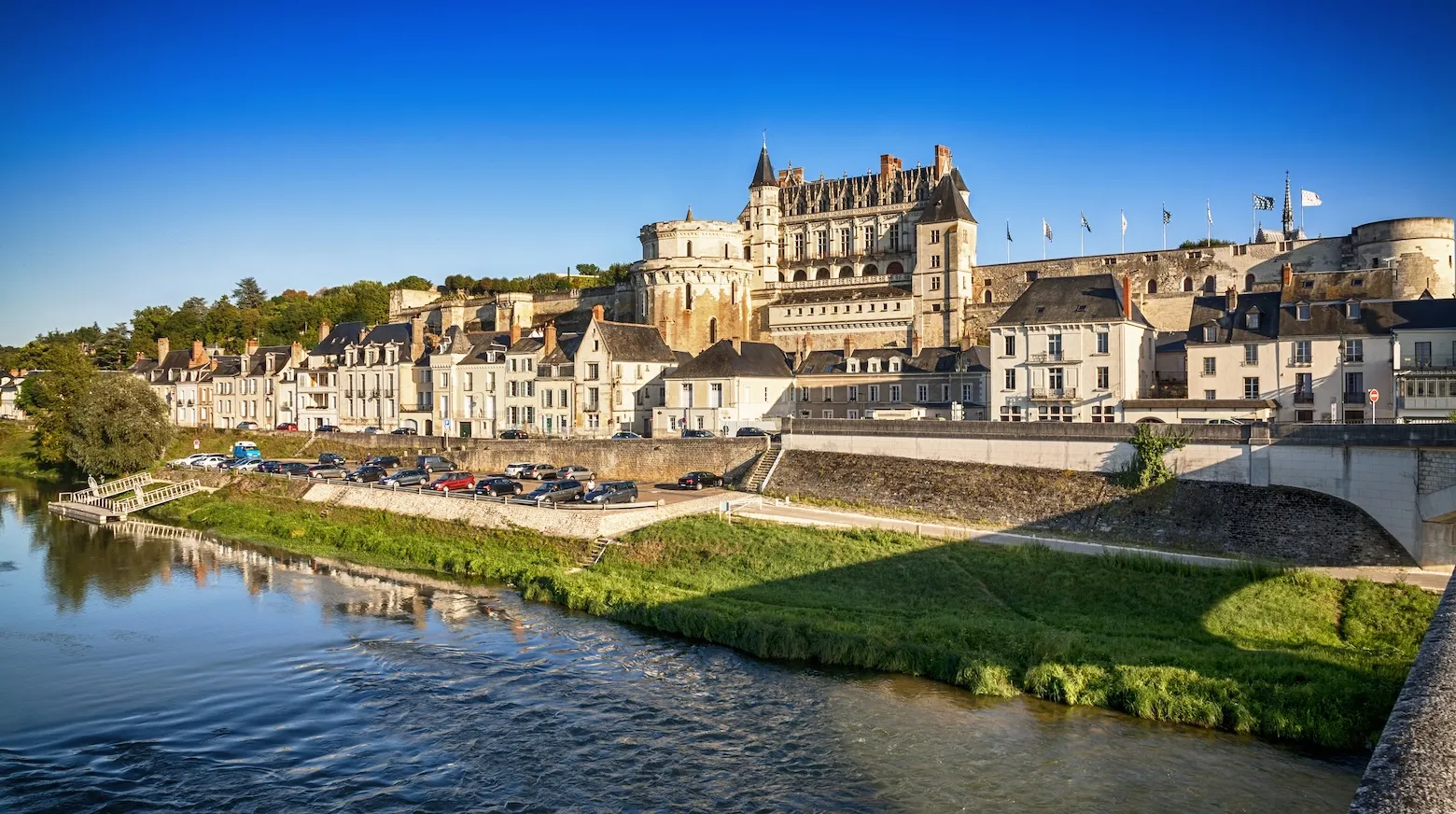
Pedaling the Garden of France: A Cyclist's Guide to the Loire Valley
There's a reason the French have a phrase for the particular pleasure this region offers: la douceur de vivre, the sweetness of life. Mild climate, unhurried pace, world-class wine, and a landscape so agriculturally rich it earned the nickname "the Garden of France" — the Loire Valley has been seducing visitors for centuries. What makes it especially well suited to cyclists, though, is something more practical: it's flat. Genuinely, gloriously flat, with much of the riding along dedicated bike paths that wind past vineyards, historic towns, and — the region's real headline act — an almost absurd concentration of castles.
A cycling tour through this UNESCO World Heritage-listed valley typically links towns like Blois, Amboise, Montbazon, and Chinon, following the Loire River as it curves through north-central France. Along the way, riders pass through more than a thousand years of French royal history, one château at a time.
A Landscape Made for Easy Miles
The Loire Valley sits in a mixed oceanic-continental climate zone, with warm summers and cool winters, and rain that can show up in any season. The sweet spot for a cycling trip runs from June through September, when temperatures are pleasantly warm and rainfall risk drops a little. Spring and fall bring fewer tourists but also cooler, wetter conditions — worth planning around, though not a dealbreaker. Winter touring isn't recommended at all.
What sets the region apart from more mountainous cycling destinations is the terrain itself. This is intermediate, leisure, and family-friendly cycling country, and a good chunk of the route follows La Loire à Vélo, an 800-kilometer dedicated cycling path that traces the river from Nevers in central France all the way to the Atlantic. The stretch between Sully-sur-Loire and Chalonnes-sur-Loire is itself a UNESCO World Heritage site — a rare case of the bike path being as celebrated as the scenery around it. At 1,200 kilometers, the Loire is the longest river in France, and riding alongside it means a near-constant backdrop of water, vineyards, and, sooner or later, another château appearing over the treeline.
The Castles: An Almost Unfair Concentration of Grandeur
If there's one thing that defines a Loire Valley cycling trip, it's the châteaux. By the 16th century, advances in artillery had made medieval fortifications obsolete, and French nobility responded by converting the region into something closer to an architectural flex zone — trading defensive fortresses for elegant pleasure palaces designed purely to display wealth, taste, and status. The result, centuries later, is one of the highest concentrations of extravagant castles anywhere in the world, many of them just a short pedal apart.
A few stand out even in this company:
- Château de Chambord — Often the first château riders encounter, and hard to top. Its distinctive French Renaissance architecture includes a remarkable double-helix staircase, designed with input attributed to Leonardo da Vinci, who spent his final years in the region at the invitation of King François I.
- Château de Blois — Perched on a rocky outcrop above the Loire, the Château Royal de Blois anchors a city that endured heavy WWII damage but still charms with cobblestone streets and medieval timbered houses.
- Château d'Amboise — Dominating the Amboise skyline, this was the residence of King Charles VIII. Nearby sits the Clos Lucé, Leonardo da Vinci's final home, where visitors can see his bedchamber, his workshop, and roughly 40 models built from his own sketches — including a working propeller design centuries ahead of its time. Amboise is, in fact, da Vinci's final resting place.
- Château de Chenonceau — Arching gracefully across the River Cher, Chenonceau is known as the "Ladies' Castle" for the string of remarkable women who shaped its history and design.
- Château de Villandry — Famous less for the building itself than for its stunning geometric gardens, laid out with the precision of a formal chessboard.
- Forteresse Royale de Chinon — A hilltop fortress on the Vienne River with a claim to one of the most pivotal meetings in French history: it's where Joan of Arc first encountered the future King Charles VII in 1429, a moment that helped set the course of the Hundred Years' War.
The routes are dense enough with castles that the guidebook for this trip includes an actual table cross-referencing which châteaux appear on which rides — a small testament to just how many there are.
A History Written in Stone
The Loire Valley's story goes back well before its castle-building heyday. Long before recorded history, the region was inhabited by peoples who left behind megalithic structures and cave art. Julius Caesar's conquest in 52 BCE brought the area into the Roman fold, and by the 4th century, early bishops had spread Christianity through towns like Tours, Orléans, and Chartres, which became recognized centers of learning.
The centuries that followed brought waves of conflict and consolidation: Frankish King Clovis conquered the region in 507, and a long era of territorial disputes followed — first among local warlords, later between France and England after Henry Plantagenet inherited the English crown in 1154 and claimed much of western France. The 14th century brought catastrophe in the form of the Black Death, which killed roughly a third of the population, followed almost immediately by the Hundred Years' War. It was during this war that Joan of Arc rose to prominence, leading French forces to a string of victories before her martyrdom in 1431 — a sacrifice that helped galvanize a French recovery.
The Loire Valley's golden architectural age arrived in the late 15th and early 16th centuries, when the Italian campaigns of Kings Charles VIII, Louis XII, and François I gave French royalty a taste for Italian art and architecture. That influence is still visible today in the castles of Blois and Amboise. Throughout the 16th century, French nobility relocated to the region en masse, building the grand châteaux that define it, even as Wars of Religion between Catholics and Protestant Huguenots simmered in the background.
By the 17th century, France's political center of gravity had shifted decisively to Paris, though the Loire River remained a vital transportation route until the railway arrived. The French Revolution of 1789 upended the aristocratic order that had built the region's castles in the first place — not, as the guidebook dryly notes, a great time to be a royal or a noble. The Vendée Uprising of 1793, a counter-revolutionary movement near where the Loire meets the Atlantic, posed one of the most serious civil threats the young French republic faced. Nearly a century later, the Franco-Prussian War brought fighting to towns like Beaugency, and in the 1940s, the region's larger cities were occupied by Germany and later bombed by Allied forces during WWII.
In the decades since, the valley's extraordinary architectural legacy has fueled a thriving tourism industry, which — alongside strong agriculture and industry — has helped make the Loire Valley one of the most economically stable regions in France.
Eating and Drinking Your Way Down the River
If the castles are the valley's headline act, the food and wine are a close second. Loire cuisine draws heavily on the region's fertile land: creamy Crottin de Chavignol and tangy Sainte-Maure de Touraine goat cheeses, freshwater fish like pikeperch and crayfish pulled straight from the river, and orchards producing cherries, apples, and strawberries.
A few specialties are worth seeking out along the route:
- White asparagus — Grown in the region's sandy soil, prized for its tender texture and delicate flavor, and a genuine point of local pride.
- Button mushrooms ("champignons de Paris") — Cultivated in the valley's limestone caves, which provide ideal growing conditions; a staple ingredient across countless local dishes.
- Rillettes — A slow-cooked, finely shredded pork spread, traditionally served with crusty bread and cornichons.
- Tarte Tatin — The iconic upside-down caramelized apple tart, said to have been invented by accident in the 1880s at a hotel in Lamotte-Beuvron, just south of Orléans, by two sisters named Tatin.
Wine, though, may be the valley's true specialty. The Loire is France's third-largest wine-producing region by volume, spanning major appellations like Anjou, Saumur, Touraine, Sancerre, and Pouilly Fumé. White wines dominate, built primarily around Chenin Blanc and Sauvignon Blanc, alongside reds like Cabernet Franc and sparkling wines made in both the traditional méthode champenoise and the lighter méthode ancestrale.
A handful of names are worth knowing before you order:
- Sancerre — Crisp, aromatic Sauvignon Blanc with vibrant acidity and a distinctive minerality drawn from limestone and flint soils; excellent with seafood and goat cheese.
- Pouilly-Fumé — A close cousin to Sancerre, known for its smoky, flinty character derived from the region's silex soil.
- Vouvray — Made from Chenin Blanc, ranging from still to sparkling and dry to sweet, depending on the vintage.
- Chinon — A red wine built on Cabernet Franc, grown on both banks of the Vienne River, with flavors of red berries and earthy undertones.
- Saumur — Known especially for its sparkling wines, made from Chenin Blanc, Cabernet Franc, and Chardonnay grown in chalky tuffeau soils.
Wineries are scattered throughout the valley, with the highest density found around Chinon and Amboise — conveniently, two of the region's most popular overnight stops.
A Few Local Curiosities
Some of the best details in any region are the small ones, and the Loire Valley has a handful worth knowing:
Denis Papin, a 17th-century inventor from Blois, invented the steam digester — an early ancestor of the modern pressure cooker — and his research helped lay the groundwork for the steam engine, with outsized consequences for the Industrial Revolution that followed. Blois still honors him with the Escalier Denis-Papin, a staircase offering panoramic views over the river.
Tuffeau stone, the pale, chalky limestone used to build many of the valley's famous châteaux, formed roughly 90 million years ago when the entire region lay beneath a shallow sea. Quarried locally for centuries, it's the reason so many Loire buildings — grand and humble alike — share that same soft, golden-white glow.
And for something more low-key than a castle tour, seek out a guinguette — a riverside eatery, descended from cheap 17th-century Parisian taverns, where locals and travelers alike gather for a glass of wine, regional food, and, in summer, live music along the water.
Getting There
Most Loire Valley cycling tours start in Orléans, about 130 kilometers south of Paris, with an optional pickup available from Tours as well. The easiest route in is through Paris's Charles de Gaulle Airport, which serves flights from across Europe and many U.S. cities. From there, a taxi into central Paris runs around €65, or the RER B suburban train reaches Gare du Nord in about 25 minutes for roughly €12 per person, connecting onward to the city's extensive Metro network. Uber also operates throughout the airport and the city.
From Paris, direct trains from Gare d'Austerlitz reach Orléans in one to two hours depending on the service, and from the Orléans train station it's a short taxi ride or walk to most hotels.
Why the Loire Rewards a Slow Pace
What makes this region such a natural fit for cycling isn't just the flat terrain and dedicated bike paths, though those help enormously. It's the way the valley rewards unhurried travel. A car will get you to a handful of headline châteaux and back to a hotel by dinner. A bike gets you through the vineyards in between, past the guinguettes and the roadside asparagus fields, with enough time to actually notice the tuffeau stone glowing gold in the afternoon light.
This is, after all, a region that built its entire identity around la douceur de vivre — and there's really no better way to experience sweetness on a schedule that slow than from the seat of a bicycle, with a Sancerre and a plate of rillettes waiting at the end of the ride.
See the complete guidebook here.
Ready to plan your tour?
Tell us where you want to go and how you want to ride. We'll send you an itinerary.