

Request a Sample Itinerary
We will send you a sample itinerary which you can further customize as you wish. We will never sell or share your email address with anyone else.
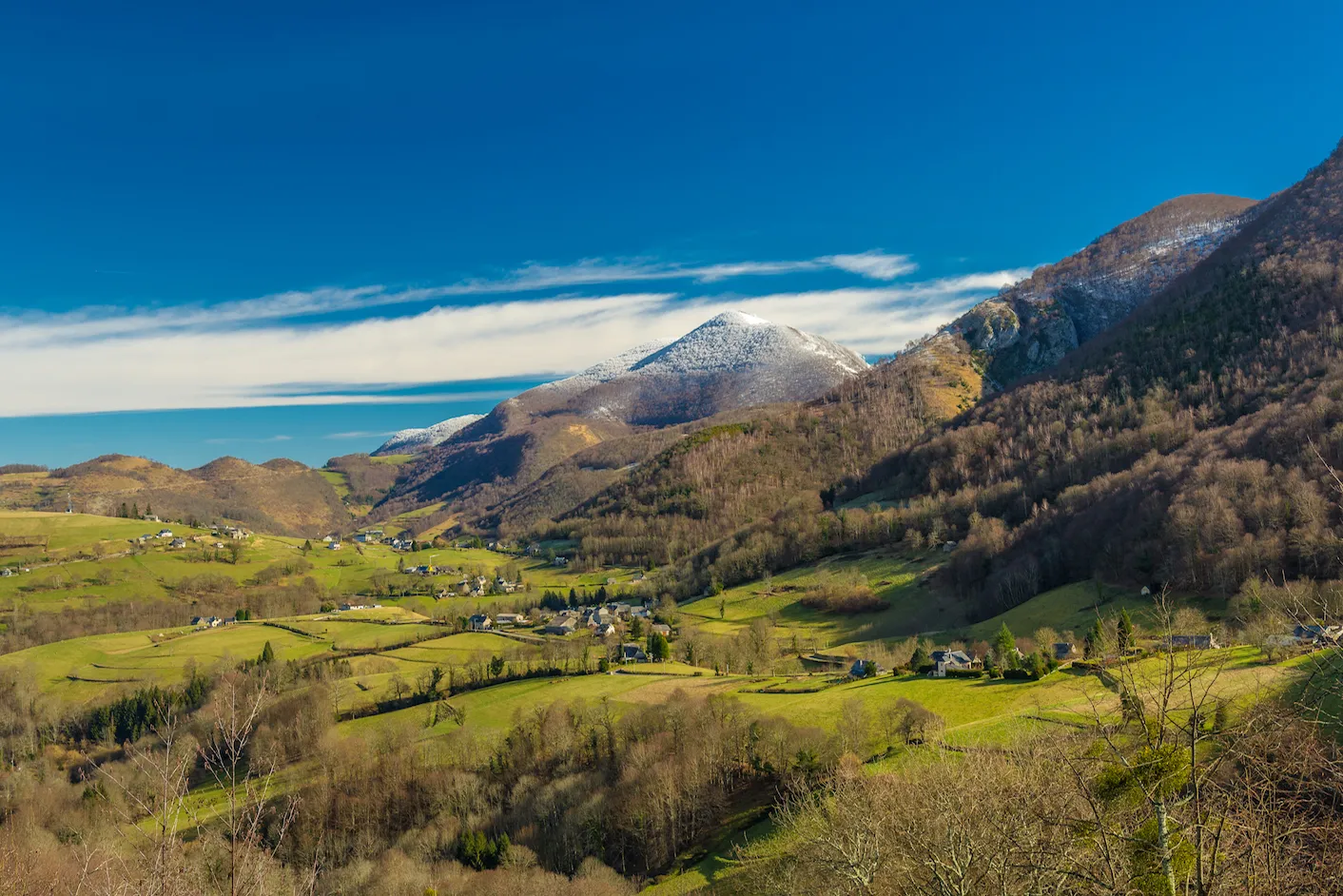
Cycling Gascony and the Pyrenees: Legendary Climbs and the Quiet Life Below Them
Some regions build a reputation on scenery. Gascony and the Pyrenees build theirs on suffering — the good kind, the kind that comes from grinding up a mountain pass named the Col du Tourmalet and understanding, halfway up, exactly why it took a century for the Tour de France to fully domesticate it. This is a region of two speeds: unhurried valley towns where markets and long dinners set the pace, and legendary alpine climbs where the mountain sets the pace instead, whether you like it or not.
A tour through this corner of southwestern France typically starts in the elegant city of Pau, winds through the vineyard-covered hills of Gascony, and climbs gradually toward the high Pyrenees, linking towns like Argelès-Gazost and Bagnères-de-Bigorre. Leisure riders can stay comfortably in the foothills and valleys, tracing quiet rivers and rolling farmland on peaceful back roads, while stronger riders can test themselves against Tour de France legends like the Col du Tourmalet, Col d'Aspin, and Hautacam — names that carry real weight in cycling history.
From Belle Époque Elegance to High Alpine Passes
Pau sets the tone for the trip: a refined, lively city perched on a ridge with sweeping mountain views, blending historic sites and Belle Époque architecture with a relaxed southern French atmosphere. From there, routes climb gradually through Argelès-Gazost, a quiet, welcoming town at the entrance to the high mountains offering easy access to both scenic valley rides and the region's major climbs, and on to Bagnères-de-Bigorre, a town nestled at the foot of the mountains that blends historic elegance with a genuine thermal spa tradition dating back to Roman times.
For those wanting a break from the saddle without giving up the views, the Pic du Midi offers a cable car ride from partway up the Tourmalet climb to breathtaking panoramic vistas over the Pyrenees, alongside a historic astronomical observatory. And no trip through the region is complete without at least a passing mention of Lourdes, one of the world's most significant Catholic pilgrimage sites, drawing millions of visitors annually to the Sanctuary of Our Lady of Lourdes — the site of reported apparitions in 1858 and a continuing source of holy water and devotion.
A Climate Shaped by Ocean and Altitude
The Atlantic Ocean, just 80 miles away, is the dominant influence on the climate of the Hautes-Pyrénées. Summer daytime temperatures typically run 70–85°F (20–30°C), though evenings cool considerably, and rain gear is essential year-round — it can rain here on any given day. Altitude adds a second variable entirely: temperatures can drop by more than 20°F between Pau, at 650 feet, and high passes like the Tourmalet, which tops out at nearly 7,000 feet.
Snow on the high passes is the main constraint on the cycling season. The higher roads aren't reliably open until early June, and the season generally wraps up by the end of September.
The Cols: Where Tour de France History Lives
The legendary climbs of the Pyrenees earn their reputation through a specific combination of length, rhythm, isolation, and raw beauty — long, steady ascents that build to dramatic scenery and technical descents demanding focus all the way back to the valley floor. A few stand out:
- Col du Tourmalet (Western Approach) — A Hors Catégorie climb and the single most frequently used mountain in Tour de France history, the Tourmalet is the defining Pyrenean ascent, linking the Vallée des Gaves with the Vallée de Campan as the highest paved pass in the French Pyrenees. From Luz-Saint-Sauveur, it's 19 km, climbing 1,404 meters to a 2,115-meter summit at an average grade of 7.4% — with a monument to the race and a café waiting at the top.
- Hautacam (Col de Tramassel) — One of the toughest climbs in the range, first used in the Tour de France in 1994 and a fixture of decisive mountain stages ever since. From Argelès-Gazost, it runs 13.6 km, gaining 1,130 meters at a 7.8% average grade, with unrelenting exposed upper slopes that make it a genuine test of endurance.
- Col d'Aubisque (Western Approach) — A classic Pyrenean giant renowned for its dramatic setting, traversing cliffs and open slopes on the way to a 1,709-meter summit — 16.6 km from Laruns, climbing 1,190 meters. A café at the top rewards the effort.
- Col de Marie-Blanque — A deceptive climb that saves its sting for the finale: gentle early kilometers lull riders into a rhythm before the final 4 km ramp up brutally to double-digit gradients, maxing out around 17%.
- Col d'Aspin — Often overshadowed by its more famous neighbor, the Tourmalet, but a rewarding climb in its own right, with steady gradients building gradually across 13 km to a 1,489-meter summit.
- Hourquette d'Ancizan — A quieter, more pastoral alternative, winding through forest and open pasture on lightly trafficked roads — a favorite for riders seeking a more tranquil Pyrenean experience.
A History Written on a Frontier
The Pyrenees have long formed a natural barrier between France and Spain, stretching more than 400 km from the Atlantic to the Mediterranean, and that geography has shaped centuries of conflict, culture, and trade in equal measure. Human presence here goes back to prehistory, with early settlements documented in caves at Gargas and Niaux, well before 10,000 BCE. Roman conquest in the 1st century BCE integrated the range into the empire, with roads linking Spain and Gaul across the mountains, and by the 8th century, Muslim forces crossing the Pyrenees into France were eventually halted by the Franks — a turning point that helped cement the range's identity as a genuine frontier. In 778, the Battle of Roncevaux Pass saw Basque forces ambush Charlemagne's army, an event later immortalized in medieval legend.
Between the 11th and 13th centuries, small mountain kingdoms and counties — Navarre, Aragon, Béarn — rose to prominence, and in 1659 the Treaty of the Pyrenees formally established the modern border between France and Spain. The 19th century brought the growth of spa culture and early tourism to towns like Bagnères-de-Bigorre and Cauterets, and by the early 20th century, the region's iconic climbs had begun appearing in the Tour de France, cementing a cycling reputation that persists today. The Spanish Civil War (1936–1939) sent refugees streaming across the mountains into France, and during World War II, those same passes served as vital escape routes for refugees, downed Allied airmen, and resistance networks moving between occupied France and neutral Spain. In the decades since, the region has seen steady growth in tourism, cycling, and protected natural parks across the range — even as distinct Basque, Gascon, and Catalan identities continue to endure within this shared mountain landscape.
Eating and Drinking in the Foothills
Pyrenean cuisine is hearty, rustic, and deeply tied to the land — rooted in pastoral traditions built around livestock, seasonal produce, and simple preservation methods designed to fuel long days outdoors. French culinary influence runs throughout, but the region also draws heavily on Basque and Gascon traditions, creating a rich and genuinely varied food culture. Meals here are generous and unhurried, often accompanied by local wines from nearby Madiran, Jurançon, and the Gascon foothills.
A handful of dishes define the mountain table:
- Garbure — A thick farmhouse soup built from cabbage, beans, and preserved meats, typically duck or ham; a genuine regional staple.
- Confit de canard — Duck preserved in its own fat and crisped before serving, alongside cassoulet in the western foothills, both dishes reflecting a cuisine engineered for sustenance through long mountain winters.
- Ossau-Iraty — The region's most famous cheese, a firm, nutty sheep's-milk variety often paired with black cherry jam in a classic Basque combination. Tomme-style cheeses are also common, with each valley producing its own subtle variation depending on local pasture and season.
- Jambon de Bayonne — The best-known of the region's cured meats, air-dried and delicately salted, alongside a wide range of local saucissons typically served simply with bread and cheese.
Wine production centers on Jurançon, the foothills' signature appellation, set on sun-exposed hillsides around Pau with views of the mountains. The region benefits from a distinctive microclimate — warm Atlantic air, mountain breezes, and long autumns that let grapes ripen slowly into intense, expressive wines. Production remains small-scale and largely family-run, with a strong emphasis on organic and biodynamic practices. Jurançon wines range from crisp, mineral-driven dry whites (Jurançon Sec) to rich, golden late-harvest sweet wines developing complex flavors of honey, apricot, citrus peel, and spice. Two grape varieties define the appellation: petit manseng, prized for retaining acidity while developing concentrated sugars in the sweeter wines, and gros manseng, typically used for fresher, drier styles with bright citrus notes. Armagnac, France's oldest brandy, is also produced nearby and commonly enjoyed as a digestif.
A Few Local Curiosities
Riders sharing the road with livestock shouldn't be surprised — each summer, herds of sheep are driven high into the mountains in a tradition known as transhumance, a seasonal movement that helps preserve alpine pastures and produces some of the region's most celebrated cheeses, including Ossau-Iraty. Flocks grazing freely along quiet mountain roads occasionally bring cycling traffic to a very literal standstill.
The Pyrenees also host a surprising range of wildlife, including marmots, chamois, griffon vultures, and even a small, rarely sighted population of brown bears — a genuine sense of wilderness that adds real texture to rides through the range's quieter, less-traveled valleys. The mountains are also crossed by several routes of the Camino de Santiago, the historic pilgrimage to Santiago de Compostela in northwest Spain, with centuries of pilgrim traffic having left behind a network of paths, refuges, and traditions still very much in use today.
Given the region's long history as a contested frontier, it's little surprise the landscape is dotted with fortresses and watchtowers — in the 17th century, French military engineer Vauban designed a series of fortified towns and citadels along the border, several of which remain remarkably well preserved and visible from the road.
Getting There
Tours start in Pau, with optional collection available from Toulouse, Biarritz, San Sebastián, or Bordeaux. Pau's train station has direct TGV service to Paris Montparnasse, typically taking about four hours and thirty minutes. Travelers flying directly into Pau Pyrénées Airport, which connects to both Paris Charles de Gaulle and Paris Orly, can reach the city center by taxi (around €40, 25 minutes) or a considerably cheaper local bus (€2, 30 minutes).
Why This Region Rewards Two Kinds of Riders
What makes Gascony and the Pyrenees such a compelling cycling destination is the way the landscape offers two entirely different experiences without ever feeling disjointed. A leisurely rider can spend days in the foothills, weaving through vineyards and market towns at an unhurried pace shaped by centuries of pastoral tradition. A determined rider can, in the very same region, climb the Tourmalet and follow, quite literally, in the tracks of Tour de France legends. Both riders end up in the same small, family-run inns in the evening, sharing the same garbure and the same bottle of Jurançon — proof that in this corner of France, the mountain sets its own terms, but the valley below still knows how to slow everything back down.
See the complete guidebook here.
Ready to plan your tour?
Tell us where you want to go and how you want to ride. We'll send you an itinerary.